Enter a half-time feel without changing the tempo
Space the backbeat more widely while preserving the original quarter-note pulse and bar count.
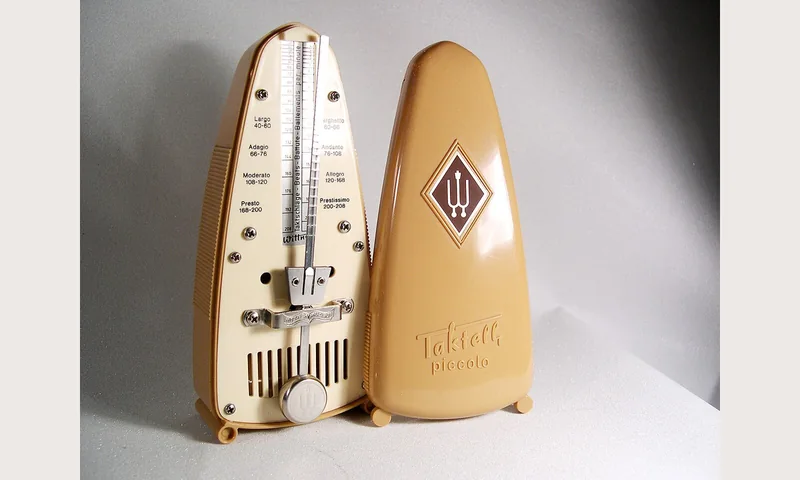
The short answer
A common half-time exercise keeps the same quarter-note pulse but places one main snare backbeat on beat three instead of two and four. The change is in the groove feel. Count the full bar continuously so it does not become an unintended tempo change.
What to do
- Play four bars of a simple groove with snare on two and four. Keep eighth notes on the hi-hat and say all four beat numbers.
- Play four bars with the main snare on three. Use a simple kick on one initially and keep the hi-hat subdivision unchanged.
- Alternate the two sections without stopping. Announce the next feel to yourself in the final bar before each change.
- Record the exercise with the click audible enough for review. Check the first full bar after each transition, not only the snare placement.
Use one reference pulse
Leave the metronome at the original quarter-note setting for this exercise. If you halve the click and alter the groove simultaneously, it becomes harder to tell whether the pulse is stable. Tap or speak all four beats even though the main snare now appears only once. The slower-feeling backbeat should sit over the same underlying grid rather than making every limb drift later.
Keep the first version sparse
Start half-time with kick on one, snare on three and steady hi-hat eighths. After that feels clear, add one kick or ghost note at a named subdivision. Dense notes can preserve activity, but they can also hide uncertainty about the bar. Return to the sparse version whenever the count becomes difficult to follow. A clear groove needs a clear centre of gravity before decoration.
Practise the return separately
Players may enter half-time comfortably and then rush while restoring snare on two and four. Loop the final half-time bar and the first regular-feel bar. Count through the boundary without a fill, then add one only if it helps the arrangement. In a band, agree on the transition location and any cue; feel changes are easier to coordinate when everyone knows the same bar number. Write a four-bar example with two bars of the original pattern and two bars of the half-time version. Keep the cymbal subdivision audible throughout. Listen at the boundary for a longer gap that belongs to the new backbeat placement, rather than a slowdown of every part.
Check the result
The metronome should retain the same relationship to the quarter notes in both sections. A listener should hear a wider backbeat spacing rather than a slower overall count.
Know the limits
Half-time terminology can vary with context. This exercise defines its exact note placement so the practice target remains clear; a specific recording may use a more elaborate pattern.
Further reading
Sources for the connections and technical principles discussed above. The diagnostic sequences are our editorial explanation. Consult the manual for your exact model before changing hardware or settings.
- Yamaha: Practice Exercises for the Beginning Drummer
- Yamaha: How to Get the Most Out of Your E-Drum Metronome
These are general educational guides, not hands-on product reviews. How we prepare our content. Cover photo source & license.
Keep working on your setup
Re-enter after stop-time without guessing the gap
Keep the phrase moving internally while the drum part rests and return at the agreed position.
Read the guide
Make single strokes sound even at a useful tempo
Use alternating strokes to hear differences in timing, height and tone before raising the tempo.
Read the guide
Keep time through a silent metronome bar
Use a short gap in the reference to hear whether your pulse changes when the click disappears.
Read the guide