Keep time through a silent metronome bar
Use a short gap in the reference to hear whether your pulse changes when the click disappears.
The short answer
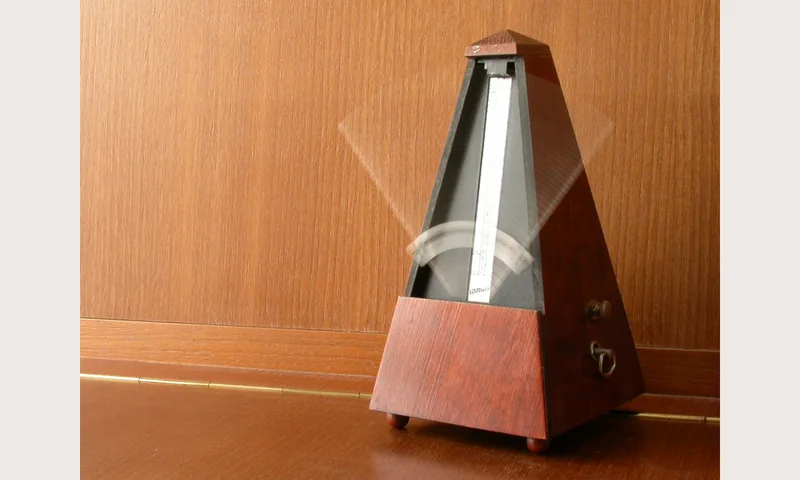
A gap exercise alternates an audible reference with a planned silent interval. Start with a short gap and a simple groove. The return click provides feedback about your estimate of the elapsed beats, while a recording reveals whether the groove changed shape inside the silence.
What to do
- Use a metronome or programmed track that plays one bar and mutes one bar at a comfortable tempo. Confirm the meter and bar length before starting.
- Count aloud through both bars without playing. Check that the returning click agrees with your next beat one.
- Add a sparse groove and repeat several cycles. Keep the dynamic level unchanged during the silent bar.
- Record the exercise and compare successive returns. Shorten the gap if you repeatedly lose the bar count, then rebuild it gradually.
Verify the reference before judging yourself
Some apps label gaps in beats, others in bars, and some mute an entire pattern rather than a single click voice. Listen through a full cycle and count it before practising. A misconfigured reference can make a good performance seem wrong. If programming a track, keep its tempo fixed and ensure the silent bar contains no accidental accent or count-in sound.
Notice how you approach the return
A common habit is accelerating near the end of the silence or slowing down while waiting for confirmation. Keep the same subdivision through the gap and treat the returning click as feedback, not a cue to restart the beat. Listen to the final two beats before the click returns. Those beats often reveal the correction that is hard to notice while playing.
Keep the results specific
Write whether the return was usually early, late or variable, and note the exact groove and tempo. One successful return can happen by chance, so listen across several short cycles. A consistent error suggests a repeatable habit; variable results may call for a simpler part or a shorter gap. Use the observation to choose the next practice block rather than assigning a broad label such as good or bad time. Keep the first and last audible bars on the recording. Compare the final hi-hat interval before the silence with the first interval after it. Matching only the returning downbeat can hide a compressed end of the gap followed by a slow corrective beat.
Check the result
The click should return near the beat you are already playing, with no last-second surge or stall. The groove should retain its note spacing and level throughout the silent section.
Know the limits
A returning click samples alignment at one moment; it does not prove every earlier note was even. Review the full recording, and do not extend the silent gap solely to make the exercise harder.
Further reading
Sources for the connections and technical principles discussed above. The diagnostic sequences are our editorial explanation. Consult the manual for your exact model before changing hardware or settings.
These are general educational guides, not hands-on product reviews. How we prepare our content. Cover photo source & license.
Keep working on your setup
Move a backbeat to an offbeat and keep the bar clear
Explore a displaced snare accent while maintaining a reliable reference groove and phrase length.
Read the guide
Practise subdivisions with a metronome
Hear the spaces between clicks.
Read the guide
Keep a flam compact without turning it into a unison
Learn the sound of two close strokes with a clear leading grace note and a stronger primary note.
Read the guide