Make single strokes sound even at a useful tempo
Use alternating strokes to hear differences in timing, height and tone before raising the tempo.
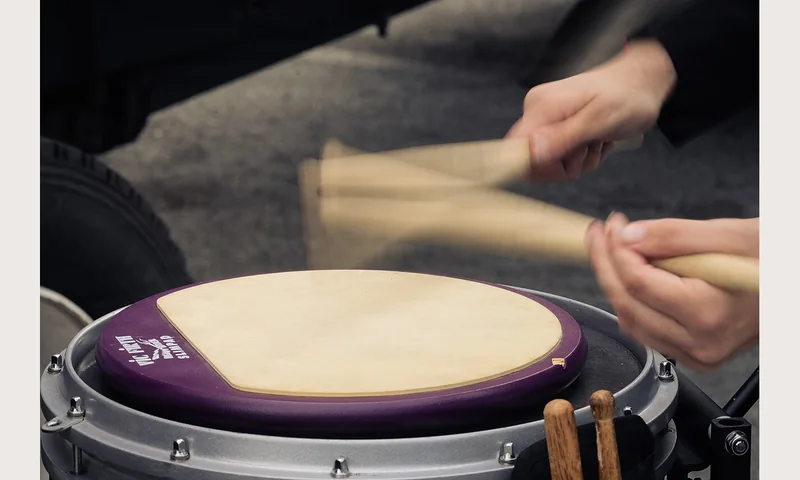
The short answer
An alternating R L pattern exposes differences between your hands because the same movement repeats without a complicated sticking. Begin quietly and listen for one consistent stream of notes. Speed is useful only while the two hands still produce the spacing and dynamic level you intended.
What to do
- On a pad or snare, play alternating quarter notes against a slow click. Use R for right and L for left. Let each stick return without squeezing it into position.
- Change to eighth notes, then return to quarters. Keep the click unchanged. Count the beat aloud so faster hands do not quietly become a faster pulse.
- Record four bars beginning with R and four beginning with L. Compare the tone, apparent loudness and distance between notes. Notice whether the first stroke after a change jumps forward.
- Practise the weaker transition briefly, then repeat the entire eight-bar test. Raise the tempo only after the same result survives a quiet restart.
Separate height from force
For this exercise, start with similar stick heights and aim for the same sound. Equal height is a helpful reference, not proof of equal volume: the hands can still grip or accelerate differently. If one note is consistently brighter, compare where each stick lands. Keep the striking area consistent before changing technique. A pad reveals timing, while a drum adds an extra test of tone.
Listen to pairs and to the stream
First hear each R L pair as two balanced notes, then listen across the boundary into the next pair. A common error is an even pair followed by a slightly longer gap. Count through several beats rather than restarting after every two notes. Slow playback of a recording can help identify the pattern, but return to normal speed before deciding whether the phrase sounds musical.
Transfer control to a musical phrase
Play a bar of alternating eighth notes followed by a familiar groove, keeping the pulse intact. Then use the single strokes for a short fill that ends before the next downbeat. The aim is to carry even spacing into the song rather than accumulate an isolated maximum-speed number. Keep a dated recording at one reference tempo so later comparisons use the same task.
Check the result
Eight bars should sound like one continuous line without an alternating loud-soft pattern or a hesitation when the leading hand changes. Check the first bar as carefully as the last.
Know the limits
There is no universal passing tempo. Pads and drums rebound differently, and tension is not a shortcut to speed. Stop if the exercise becomes painful; resume only when the cause has been addressed.
Further reading
Sources for the connections and technical principles discussed above. The diagnostic sequences are our editorial explanation. Consult the manual for your exact model before changing hardware or settings.
These are general educational guides, not hands-on product reviews. How we prepare our content. Cover photo source & license.
Keep working on your setup
Make a useful speaker audition playlist
Choose passages that expose your needs rather than impress in a showroom.
Read the guide
Build double strokes without hiding the second note
Compare both notes of each double and develop a roll that stays clear at more than one speed.
Read the guide
Enter a half-time feel without changing the tempo
Space the backbeat more widely while preserving the original quarter-note pulse and bar count.
Read the guide