Fit a five-stroke roll into a short fill
Give a short roll a definite ending so it can fit into a measured drum phrase.
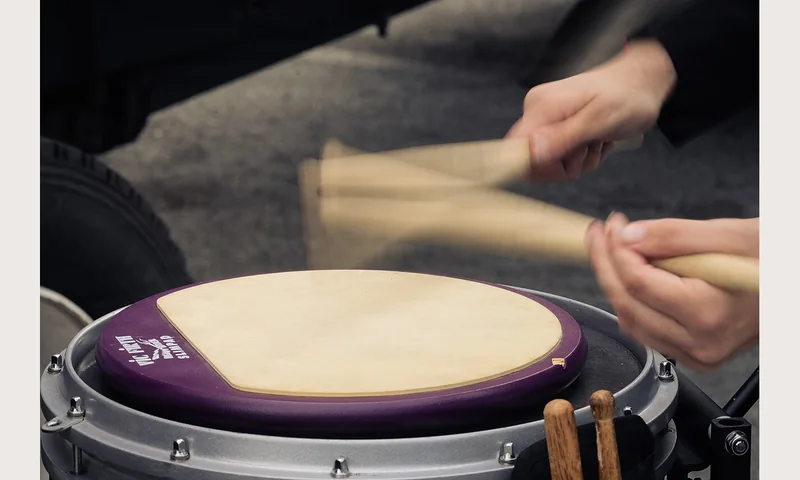
The short answer
A five-stroke roll combines two doubles with a final single stroke: RR LL R, or the reverse. The final note is part of the rhythm, not an extra hit after the fill. Decide where that release belongs before deciding how fast the preceding doubles should move.
What to do
- Play RR LL R slowly, then LL RR L. Separate each group with silence so the five contacts stay clear.
- Choose a final-note destination such as beat four. Speak a rhythm that places the four preceding notes evenly before it. Clap the rhythm before adding the sticking.
- Play three beats of a simple groove and the planned roll ending. Reduce the groove to quarter-note hi-hat if coordinating the entrance is difficult.
- Record several groove-and-fill cycles. Check both the roll ending and the next beat one. Keep the same form when reversing the leading hand.
Learn the sequence before compressing it
At first, make every note audible. Two doubles that collapse into uncontrolled buzzes can disguise an uncertain sticking. Listen particularly to the second note of each double and to the gap before the final single. Once the sequence is dependable, choose a musical rhythm for it; the name five-stroke roll describes the stroke sequence rather than a requirement that every rendition has one fixed duration.
Work backwards from the release
Sing the last note at its intended place, then add the two pairs before it. This helps prevent a common error: beginning the roll whenever convenient and hoping the ending reaches the beat. Use a click slowly enough to count the chosen subdivision. If the ending is consistently late, simplify the entrance instead of rushing the pairs unpredictably.
Change one musical feature at a time
Keep the roll on the snare until it fits. Then place the final single on a tom or on a cymbal supported by bass drum. Finally experiment with a louder release and quieter doubles. Recheck the count after each change, because a larger movement or new foot stroke can delay the ending. A compact, well-placed version is a complete musical fill. Compare a roll that releases on beat four with one that releases on the following one. State the release target aloud before each attempt. The same sticking can occupy different spaces depending on note values, so the target note must be part of the written rhythm.
Check the result
The roll should have five intentional contacts, a release on the chosen subdivision and an unhurried return to the next groove. Both leading-hand versions should preserve the same rhythm.
Know the limits
A very fast roll can sound continuous even when the contacts are uneven. Keep a slower reference test. Use a musical dynamic range rather than forcing rebound through harder hits.
Further reading
Sources for the connections and technical principles discussed above. The diagnostic sequences are our editorial explanation. Consult the manual for your exact model before changing hardware or settings.
These are general educational guides, not hands-on product reviews. How we prepare our content. Cover photo source & license.
Keep working on your setup
Make a two-beat fill fit the end of a bar
Keep the first half of the measure intact and enter the fill at a defined point.
Read the guide
Start an ear-training routine with short phrases
Connect listening, singing and playing.
Read the guide
Finish a short musical idea
Limit the project until it has an ending.
Read the guide