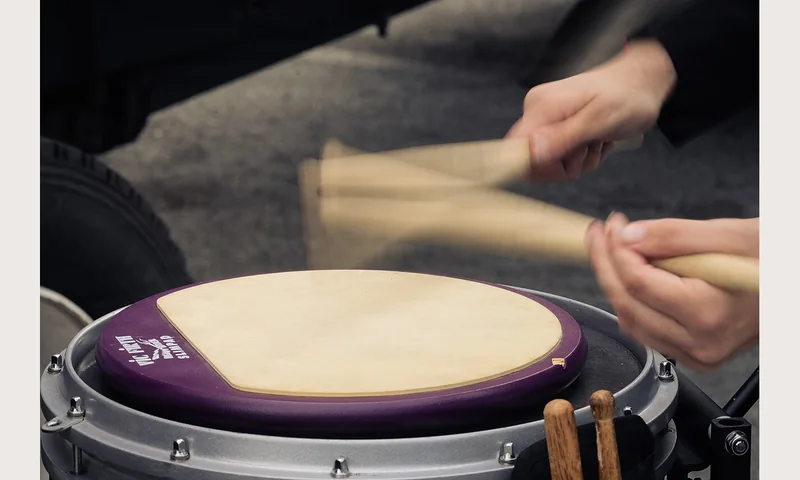
The short answer
A useful session has a specific task and a way to tell whether it improved. Playing the whole piece repeatedly can hide the same mistake inside familiar music.
What to do
- Choose one short passage and describe the problem, such as an uneven transition or a missed rhythm.
- Practise the smallest section that includes the lead-in and exit. Use a tempo at which you can notice and correct the problem.
- Finish by returning the passage to its musical context. Record one attempt and write the next task in a sentence.
Describe an observable problem
Replace a broad goal such as getting better with something you can hear or count: an uneven fill, a missed chord change or a phrase that speeds up. Choose a short passage that exposes it. Record one ordinary attempt before practising so the session starts from evidence rather than from how difficult the passage feels in the moment.
Design a small repeatable exercise
Reduce the passage to the smallest useful unit while preserving its musical context. Decide what a successful attempt sounds like and use a tempo at which you can notice the error. Work in short focused blocks with pauses to listen. Repeating a mistake at full speed is activity, but it does not automatically supply useful feedback.
Retest in the original music
Return to the complete phrase and record another attempt under the same conditions. Compare timing, tone or accuracy against the specific starting problem. Write one sentence about what improved and what remains inconsistent. If progress does not transfer, adjust the exercise next time rather than extending the same loop indefinitely. A clear stopping point helps preserve attention.
Check the result
Compare the final attempt with the first at the same tempo. Look for repeatable control rather than one lucky performance.
Know the limits
Do not treat session duration as proof of progress. Pain or persistent discomfort is a reason to stop and reassess technique with appropriate help.
Further reading
Sources for the connections and technical principles discussed above. The diagnostic sequences are our editorial explanation. Consult the manual for your exact model before changing hardware or settings.
These are general educational guides, not hands-on product reviews. How we prepare our content. Cover photo source & license.
Keep working on your setup
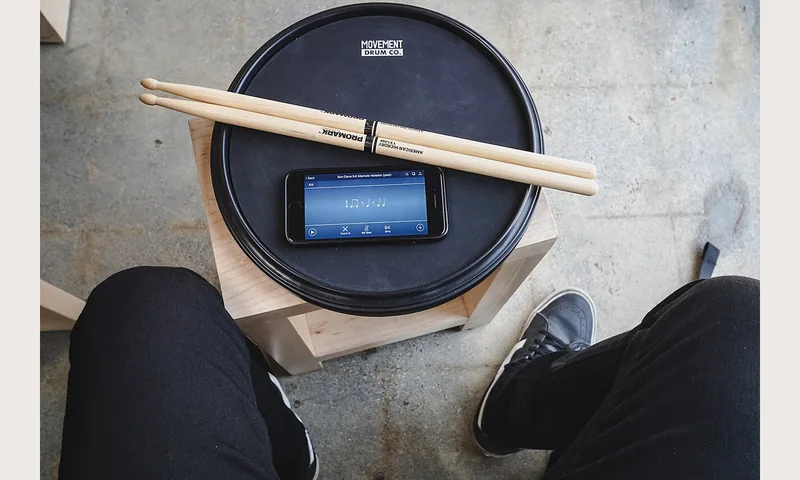
Use slow practice without losing the groove
Keep the relationships between notes intact.
Read the guide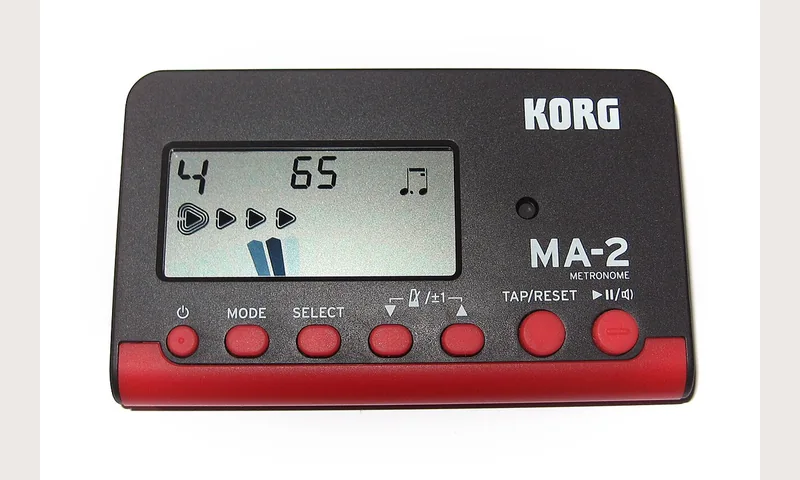
Practise subdivisions with a metronome
Hear the spaces between clicks.
Read the guide
Learn a song by mapping its sections
Build a map before memorising every detail.
Read the guide