Use quarter-note clicks to check a sixteenth-note groove
Build a clear four-part subdivision between metronome clicks without relying on a click for every note.
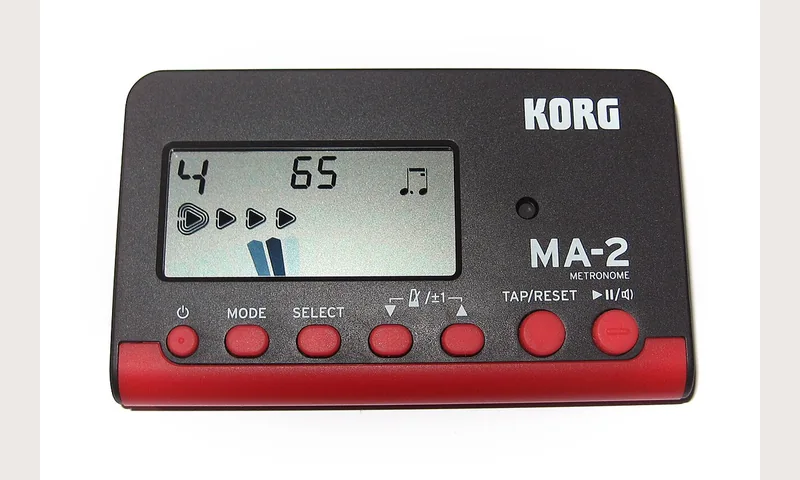
The short answer
With a quarter-note click, a sixteenth-note grid has four positions per beat: 1 e and a. Learn to speak and play that spacing evenly before choosing which notes belong in a groove. Silence occupies a defined position too; a missing note should not collapse the space around it.
What to do
- Speak 1 e and a 2 e and a over a slow quarter-note click. Clap only the beat numbers at first, then all four positions.
- Play even alternating sixteenths on a pad for one bar. Rest for one bar while keeping the spoken count moving.
- Choose a short rhythm that leaves one position silent. Say every syllable while playing only the written notes.
- Apply that rhythm to a simple snare or hi-hat part. Record the pattern and verify that beat notes continue to coincide with the click.
Learn the space before the pattern
A complex rhythm is easier to control when the complete grid is familiar. Begin with all four positions evenly spaced, then remove selected notes without changing the tempo. This is different from stretching the remaining notes to fill the beat. Keep speaking the empty syllables until the rests have a clear duration. A short written count line can prevent repeated guessing about where a note belongs.
Use rests as active timing
The silent bar is part of the exercise. Keep the count going and prepare the next entrance while the hands rest. If returning to the first beat is unreliable, shorten the silence to two beats, then extend it again. This checks whether the subdivision continues internally instead of existing only while the sticks are moving. Keep the click quiet enough to hear your own note spacing.
Separate subdivision from hand speed
Use a tempo where the notes are comfortable and focus on equal spacing. A tense fast roll does not establish a reliable sixteenth-note grid. After the pattern is secure, add one limb or move one note to a different surface. Recheck the original rhythm after every change. The useful test is whether the count survives orchestration, dynamics and rests.
Check the result
The four slots should fit evenly between consecutive clicks, and silent positions should retain their place. After a rest, the next entrance should meet the click without an extra preparatory note.
Know the limits
A metronome confirms its own pulse, not the accuracy of every note between clicks. Use a recording and a slower test to inspect uneven subdivisions rather than assuming click alignment proves the whole rhythm is even.
Further reading
Sources for the connections and technical principles discussed above. The diagnostic sequences are our editorial explanation. Consult the manual for your exact model before changing hardware or settings.
- Yamaha: How to Get the Most Out of Your E-Drum Metronome
- Yamaha: Practice Exercises for the Beginning Drummer
These are general educational guides, not hands-on product reviews. How we prepare our content. Cover photo source & license.
Keep working on your setup
Use slow practice without losing the groove
Keep the relationships between notes intact.
Read the guide
Carry three-note groups across a sixteenth-note grid
Keep a repeating three-note idea even while its accents move across four-note beats.
Read the guide
Use module ambience without washing out a groove
Add space while preserving the timing and definition of your playing.
Read the guide