Tune a snare batter head evenly
Build a consistent snare batter tuning before adding wires, damping or extra tension.
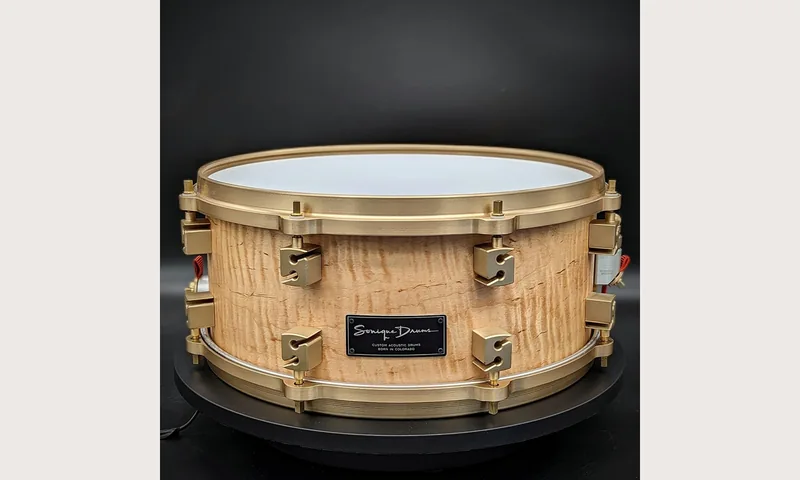
The short answer
Even tension gives you a useful starting point, but a snare drum should ultimately be judged by how it plays. Isolate the batter head, bring it up gradually, and compare notes near the lugs before deciding whether the whole drum needs a higher or lower voice.
What to do
- Disengage the wires and place the drum on its stand with the basket clear of the strainer. Remove temporary damping so you can hear changes.
- Check that every rod turns normally. Bring a loose head to gentle, even contact with the hoop using opposing pairs.
- Tap near each lug at the same distance from the edge. Correct the most obvious differences in small increments, revisiting neighbouring positions after each circuit.
- Play centre strokes, edge strokes and quiet doubles. Raise or lower all rods gradually if the overall response needs to change.
- Engage the wires, add only the damping the part needs, and compare a short phrase at several dynamics.
Keep wire response separate
Snare wires can make two batter settings appear more different than they are. Turn them off for the first comparison, then restore the same approximate wire tension for the playing test. If the open drum is clear but the complete snare sounds strangled, changing batter pitch again may obscure the real issue. Check wire alignment and tension as separate adjustments.
Listen at the edge consistently
The sound near a lug changes with where and how hard you tap. Use one stick and repeat the same light stroke at every position. Resting a fingertip lightly in the centre can reduce competing vibration during the comparison, but remove it before judging the complete note. A tuner is optional; a repeatable listening method is more useful than chasing unstable readings.
Save a playable reference
Record a groove containing backbeats and ghost notes before making a second tuning experiment. Write down the head and a plain description of the result. If the next setting gains a dramatic crack but loses the quiet notes your music uses, the earlier tuning remains a valid choice. Change the overall range in small steps rather than making unrelated corrections at every lug.
Check the result
A useful result has a stable centre note, predictable rebound and quiet strokes that speak. You can still hear overtones; the aim is consistency, not eliminating every ring.
Know the limits
Do not force a rod that binds or assume a fixed number of turns produces a universal pitch. Stop if a hoop distorts, a fitting moves in the shell or the head cannot settle evenly.
Further reading
Sources for the connections and technical principles discussed above. The diagnostic sequences are our editorial explanation. Consult the manual for your exact model before changing hardware or settings.
These are general educational guides, not hands-on product reviews. How we prepare our content. Cover photo source & license.
Keep working on your setup
Replace a tom batter head without losing your starting sound
Keep a useful tuning reference while replacing a worn tom head and checking the parts underneath.
Read the guide
Replace a snare-side head without over-tensioning it
Handle the delicate lower head as a separate component from the snare batter.
Read the guide
Balance snare wire tension for quiet and loud notes
Find the wire setting that responds to light strokes without shortening the drum excessively.
Read the guide