Reduce plosives without making the voice dull
Change microphone angle and distance before heavy filtering.
The short answer
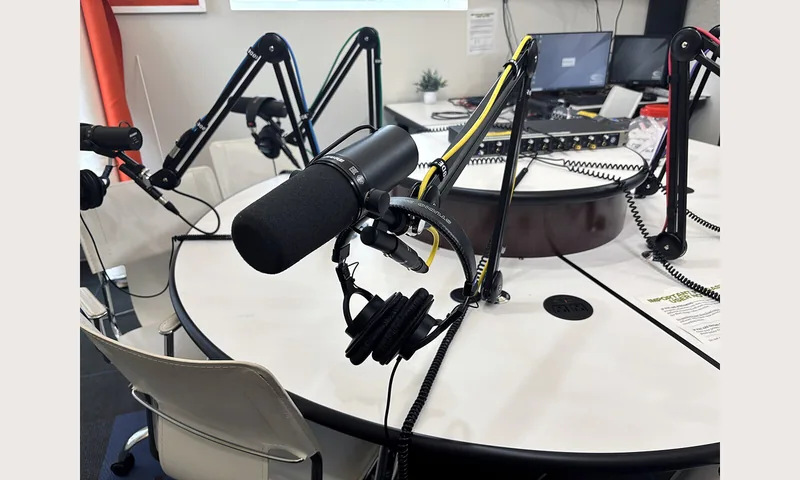
A burst of air on a P or B can overload a microphone without the overall sentence being loud. A pop filter and slightly off-axis placement target the airflow.
What to do
- Record a short phrase with several P and B sounds at normal delivery
- Move the microphone slightly to the side of the air stream while keeping the intended pickup face towards you
- Add a pop filter and compare at matched speech level
Keep a repeatable speaking position
Moving far away may reduce plosives but increase room sound. Use a position you can maintain while reading or looking at the camera. Marking the stand location is more useful than applying a severe low cut to every future recording.
Check the result
The phrase should retain body while the low-frequency thumps are reduced, with no new clipping.
Know the limits
A filter cannot reconstruct a capsule or preamp overload already recorded. Re-record important damaged words where possible.
Further reading
Sources for the connections and technical principles discussed above. The diagnostic sequences are our editorial explanation. Consult the manual for your exact model before changing hardware or settings.
These are general educational guides, not hands-on product reviews. How we prepare our content. Cover photo source & license.
Keep working on your setup
Keep a noise gate open for quiet sentence endings
Adjust release behaviour using real speech instead of a sustained vowel.
Read the guide
Separate microphone monitoring from stream monitoring
Choose which signal the presenter hears to avoid hearing two copies.
Read the guide
Set a limiter as a final safeguard for speech
Control unexpected peaks without using limiting to set every sentence.
Read the guide