Reduce boomy bass from small speakers
Move the system and listening position before cutting random frequencies.
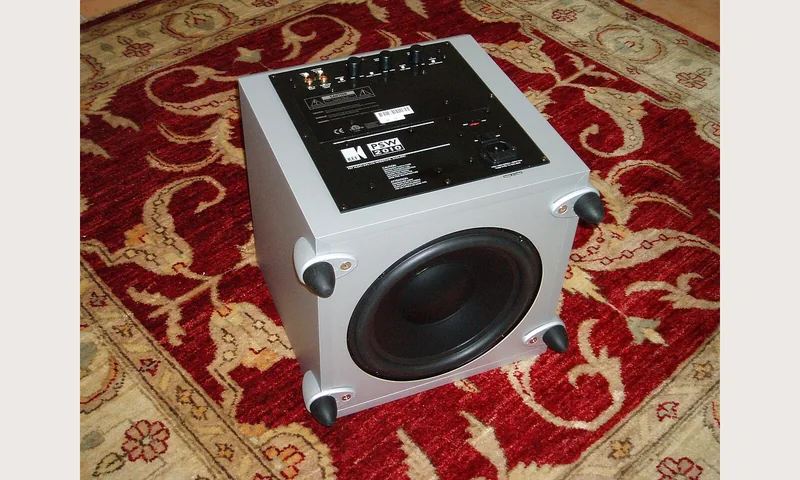
The short answer
Excessive bass at one chair can be a room or boundary effect rather than a defective speaker. Diagnose it with a repeated, moderate-level passage.
What to do
- Turn off bass enhancement and record your current controls. Play a familiar track at a fixed, comfortable level.
- Move the speakers or chair a small distance and listen again. Keep left-right symmetry while testing.
- Once placement is workable, try the manufacturer's boundary switch or a gentle EQ adjustment and compare with bypass.
Check whether the bass belongs to the recording
Play several familiar tracks and a spoken voice at moderate level. If only one song sounds heavy, do not retune the entire system around it. Temporarily turn off loudness boosts and custom EQ so you know the baseline. Check that a connected subwoofer is not duplicating bass at an unsuitable level or crossover.
Move speakers and listener separately
Mark the current positions, then try one placement change at a time within the manufacturer guidance. Distance to walls, corners and the listening seat can alter bass considerably. Compare from the normal listening position rather than with your head beside a speaker. Leave rear ports the clearance specified in the manual; stuffing them with improvised material is not a neutral placement adjustment.
Use EQ after a repeatable placement test
Keep the best practical arrangement and reduce an obvious broad excess gently if needed. Do not apply a large boost to a deep cancellation heard at one seat; it may add strain while leaving that seat weak. Recheck nearby seats and a second track. Desktop vibration may need stable stands or appropriate isolation, but a pad under a speaker will not remove every room resonance.
Check the result
A useful improvement makes bass notes more even across a passage, not simply quieter everywhere.
Know the limits
Tiny speakers have output limits; forcing deep bass can increase distortion. Treatment or a different placement may be necessary when the room strongly dominates.
Further reading
Sources for the connections and technical principles discussed above. The diagnostic sequences are our editorial explanation. Consult the manual for your exact model before changing hardware or settings.
These are general educational guides, not hands-on product reviews. How we prepare our content. Cover photo source & license.
Keep working on your setup
Set up a shared listening desk
Plan controls and cable reach around both users.
Read the guide
Position desktop speakers for a clearer centre image
Start with symmetry and ear-level orientation.
Read the guide
Connect a turntable to powered speakers
Identify where the phono stage and volume control live.
Read the guide