Practise a groove with the click on beats two and four
Hear a slower metronome setting as the backbeat while preserving the full four-beat bar.
The short answer
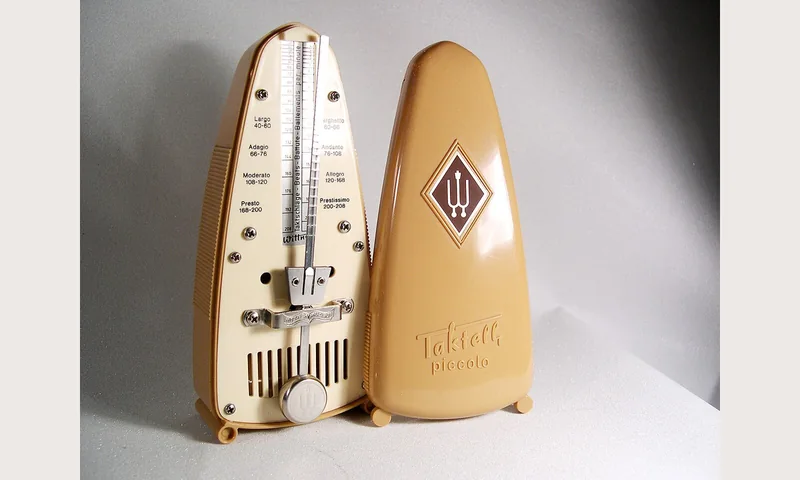
Assigning a click to beats two and four leaves more of the pulse for you to maintain. First establish the intended quarter-note tempo, then set the metronome to half that number and orient the clicks carefully. A half-rate click is useful only when its role in the bar stays clear.
What to do
- Choose an easy reference tempo and play a simple groove with a quarter-note click. Count at least two full bars aloud.
- Set the metronome to half the reference number. Count the clicks as two and four, leaving one and three halfway between them.
- Play only snare backbeats with the clicks, then add kick on one and three. Restore the hi-hat after the orientation is stable.
- Record a short take and say the count-in on the recording. Stop and restart several times rather than relying on one lucky alignment.
Establish the first downbeat deliberately
A click at half rate can represent one and three just as easily as two and four. The metronome does not know which interpretation you intend. Speak one, click-two, three, click-four before playing and make the first kick land on your stated one. If the bar orientation flips unnoticed, stop and rebuild the count rather than continuing a long exercise with an ambiguous reference.
Keep the space between clicks alive
Quietly count the eighth-note subdivision or play a simple hi-hat pattern. The off-click beats should feel as deliberate as the clicked backbeats. Avoid waiting for a click and then correcting the groove after hearing it; that produces a repeated catch-up motion. Record a manageable section and listen for a consistent distance from beat one to two and from two to three.
Return to the full click as a check
After a short half-rate block, restore the quarter-note reference at the original tempo and play the same groove. This is a diagnostic comparison, not a punishment for finding the sparse version difficult. If the full click reveals uneven spacing, work on a smaller phrase and repeat. Choose a simple groove first so coordination does not obscure the timing task. Try a spoken two-bar count before every restart, including after a successful take. This checks whether you can establish the beat assignment independently. If the first bar is ambiguous but later bars settle, work on the count-in rather than extending the playing block.
Check the result
Your spoken one should remain one throughout the take, and snare backbeats should meet the clicks without repeated corrections. Restoring quarter-note clicks should feel like adding information to the same pulse.
Know the limits
A sparse click does not automatically create better time or feel. Use it as one listening exercise, and return to a denser reference whenever the intended beat assignment becomes uncertain.
Further reading
Sources for the connections and technical principles discussed above. The diagnostic sequences are our editorial explanation. Consult the manual for your exact model before changing hardware or settings.
These are general educational guides, not hands-on product reviews. How we prepare our content. Cover photo source & license.
Keep working on your setup
Make two bass-drum notes clear inside a groove
Add a short bass-drum double while preserving the surrounding pulse and the second note.
Read the guide
Build a three-four groove that keeps its three-beat shape
Keep a repeating three-beat bar clear while moving beyond a familiar four-beat groove.
Read the guide
Use slow practice without losing the groove
Keep the relationships between notes intact.
Read the guide