Make two bass-drum notes clear inside a groove
Add a short bass-drum double while preserving the surrounding pulse and the second note.
The short answer
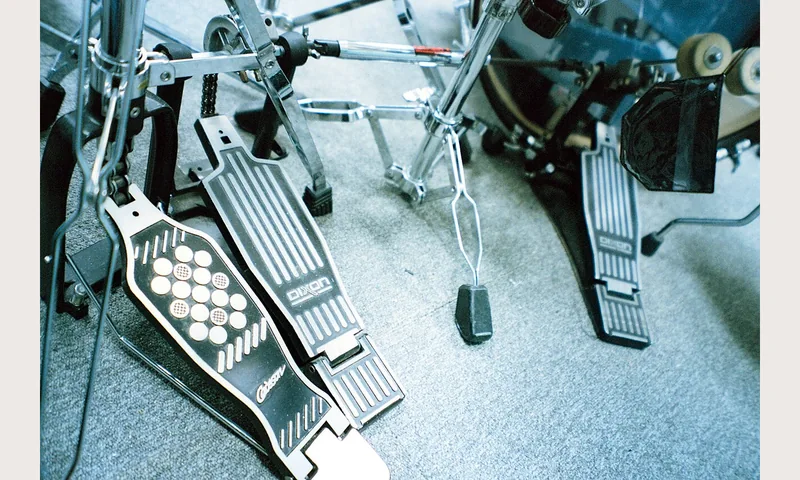
Begin by naming two rhythmic positions for the bass drum rather than chasing a fast foot motion. The aim is two intended attacks with enough recovery to continue the groove. Keep the upper-body part simple while finding a comfortable movement at a slow reference tempo.
What to do
- Play one kick on beat one with steady eighth-note hi-hats. Add the snare on two and four only after the pulse feels consistent.
- Add a second kick on the and of one. Count 1 and aloud and listen for two distinct attacks.
- Move the second kick to the e of one for a closer sixteenth-note pair, reducing the tempo first. Keep all other parts unchanged.
- Record four bars with the single kick and four with the pair. Check the second note, the next hi-hat and the backbeat on two.
Name the rhythm before changing technique
Two eighth notes and two sixteenths require different spacing even though both involve two foot strokes. Speak or clap the chosen rhythm against the click before playing it. If the double compresses into an indistinct bounce, lower the tempo until both attacks have a clear position. A specific rhythm gives the foot a musical task instead of an undefined demand to move faster.
Let the pedal return consistently
Check that the pedal can travel and return freely and that your seated position allows a comfortable foot movement. Technique choices vary between players and tempos, so avoid forcing one named method on every pair. Listen for whether the second stroke remains deliberate. If it depends on an accidental beater rebound, simplify the movement and work at a slower speed.
Protect the rest of the pattern
Foot concentration can make the hi-hat hesitate or pull the snare early. Remove the snare temporarily and compare the hi-hat spacing with and without the double. Restore the backbeat only when that part remains steady. A short recording helps identify whether the problem is the second kick itself or a nearby note that moves when your attention shifts to the foot. After the double is stable, play one repetition with the second note quieter, then return to an even pair. This tests whether you can choose its level rather than accept whatever rebound produces. Keep the rhythm unchanged and use a slow enough tempo to hear both attempts clearly.
Check the result
Both bass-drum attacks should be identifiable at their intended positions, and the hi-hat and next backbeat should keep the same timing. The pair should remain controlled after a short pause.
Know the limits
This is a rhythm and control exercise, not a prescription for a particular foot technique or pedal setting. Persistent discomfort calls for stopping and reassessing the setup rather than forcing more repetitions.
Further reading
Sources for the connections and technical principles discussed above. The diagnostic sequences are our editorial explanation. Consult the manual for your exact model before changing hardware or settings.
These are general educational guides, not hands-on product reviews. How we prepare our content. Cover photo source & license.
Keep working on your setup
Check phase in a two-microphone drum recording
Compare the microphones together, not only in solo.
Read the guide
Balance bass drum batter and resonant heads
Explore the relationship between the two bass drum heads before adding heavy damping.
Read the guide
Position bass drum damping with light head contact
Use a stable, minimal amount of internal damping and compare where it touches.
Read the guide