Check phase in a two-microphone drum recording
Compare the microphones together, not only in solo.
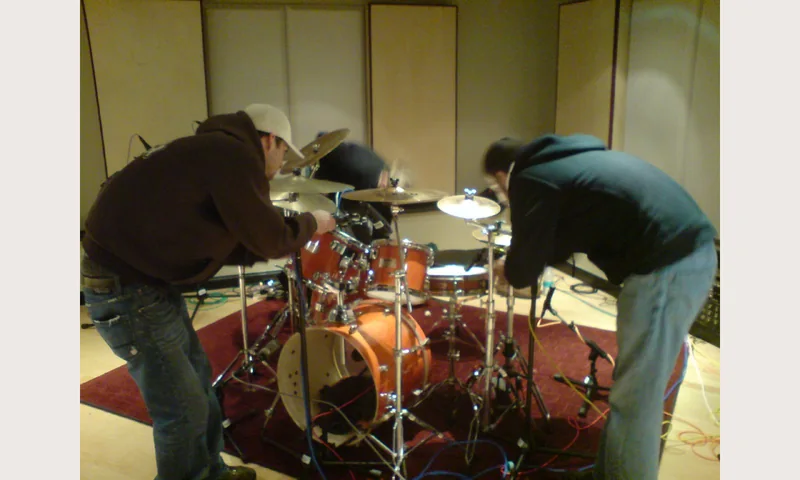
The short answer
A kit can sound full through either microphone but thin when combined. Arrival-time differences and polarity relationships change which frequencies reinforce or cancel.
What to do
- Record a repeated kick-and-snare pattern without moving the microphones.
- Listen to both tracks together in mono. Temporarily invert one channel's polarity and compare the body of the kick and snare.
- If neither choice is convincing, move one microphone a small distance and record again. Keep notes and compare at the same fader settings.
Make a mono comparison first
Pan both microphones to the centre and listen with the same fader balance you expect to use. Mute each in turn, then restore both. A loss of low-frequency body that appears only when they combine is worth investigating. Check the kick and snare separately and then a full groove. Two individually impressive solo sounds do not guarantee a useful combination.
Distinguish polarity from timing
A polarity switch reverses positive and negative values; it does not move a microphone closer or make every frequency arrive together. Compare both polarity settings without changing the level. If one restores snare body but makes the kick thin, try a small placement change and record again. Avoid automatically aligning every visible transient: microphones may capture different parts of a drum and different amounts of room sound.
Keep a repeatable placement record
Measure or mark positions relative to stable kit features and note which channel was inverted. Do not move a stand while a drummer is playing. Listen to the stereo image after the mono check; an alignment that changes spaciousness may be a creative choice rather than a universal improvement. Keep the unprocessed recordings so later edits can be compared with the original capture.
Check the result
Choose the placement that gives a stable combined sound across several drums, then check the stereo version as well.
Know the limits
A polarity switch reverses the waveform; it is not a universal time-alignment tool. Fixing one drum can worsen another, so judge the whole groove.
Further reading
Sources for the connections and technical principles discussed above. The diagnostic sequences are our editorial explanation. Consult the manual for your exact model before changing hardware or settings.
These are general educational guides, not hands-on product reviews. How we prepare our content. Cover photo source & license.
Keep working on your setup
Record acoustic drums with one microphone
Find the balance in the room before reaching for processing.
Read the guide
Record a guitar amplifier at home
Use speaker position and mic placement to shape the recorded tone first.
Read the guide
Place a podcast microphone for clear speech
Keep the mouth-to-mic relationship consistent and control air blasts.
Read the guide