Centre a set of snare wires under the drum
Align replacement snare wires so both ends pull straight and the strainer has room to adjust.
The short answer
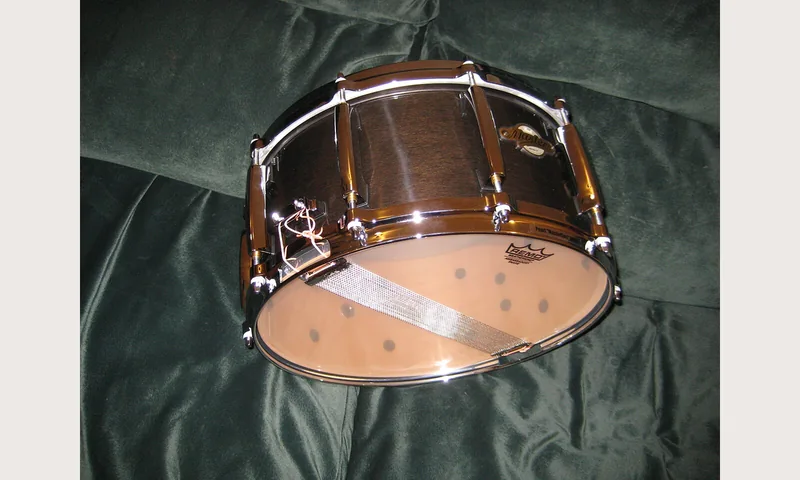
Centred wires should follow the snare beds and pull evenly between the butt plate and strainer. Correct alignment helps you set tension predictably. It is worth checking whenever a wire set looks skewed or a replacement sounds uneven despite a healthy bottom head.
What to do
- Place the drum securely with the delicate bottom head protected from the work surface. Disengage the strainer and relax its adjustment as described in the manual.
- Lay the appropriate wire set over the snare beds. Inspect for bent strands, lifted end plates or rough edges before attaching it.
- Route the recommended straps or cords through their intended slots. Keep the wire set centred and the pull straight while securing each attachment.
- Return the drum to its stand and engage the strainer gently. If the wires shift sideways, release tension and correct the attachment instead of dragging them tight across the head.
- Set working tension in small steps and compare quiet strokes, backbeats and the disengaged drum.
Inspect the entire wire set
A single bent strand can hang away from the others and rattle after the main note. Look from the side as well as directly above. If the wires have been stretched unevenly, centring them may not restore a balanced contact pattern. Replace a damaged set with a suitable part instead of cutting random strands and expecting a predictable result.
Keep the bottom head safe
A snare-side head is thin and easy to mark with tools or wire ends. Work with clean hands and keep the drum stable. Never rest it directly on an exposed adjustment screw, sharp bench edge or loose hardware. If you discover a puncture or deep crease, address the head before using wire tension to compensate for the resulting noise.
Record the attachment arrangement
Before removing working wires, take clear pictures of the straps, clamps and strainer position. Manufacturer designs differ, and a familiar-looking mechanism can route its cord differently. A reference photo helps restore the original arrangement, but use the manual to resolve doubt. After the first playing session, recheck that the attachment remains secure and that adjustment travel is still available.
Check the result
Both end plates should sit sensibly across the beds, the wire set should stay aligned during switching, and quiet strokes should produce a consistent response.
Know the limits
Wire length, strand count and end-plate design must suit the drum. Do not bend end plates to force a fit or overtighten a strap clamp; consult the drum and wire maker when compatibility is unclear.
Further reading
Sources for the connections and technical principles discussed above. The diagnostic sequences are our editorial explanation. Consult the manual for your exact model before changing hardware or settings.
These are general educational guides, not hands-on product reviews. How we prepare our content. Cover photo source & license.
Keep working on your setup
Trace excessive snare buzz from another drum
Identify the source of sympathetic wire buzz before tightening the snare out of its useful range.
Read the guide
Set bass drum spurs for a stable playing position
Keep the bass drum stable using the spurs and a suitable floor surface.
Read the guide
Set a drum throne for stable foot control
Use balance and pedal access to choose a practical starting seat position.
Read the guide