Trace excessive snare buzz from another drum
Identify the source of sympathetic wire buzz before tightening the snare out of its useful range.
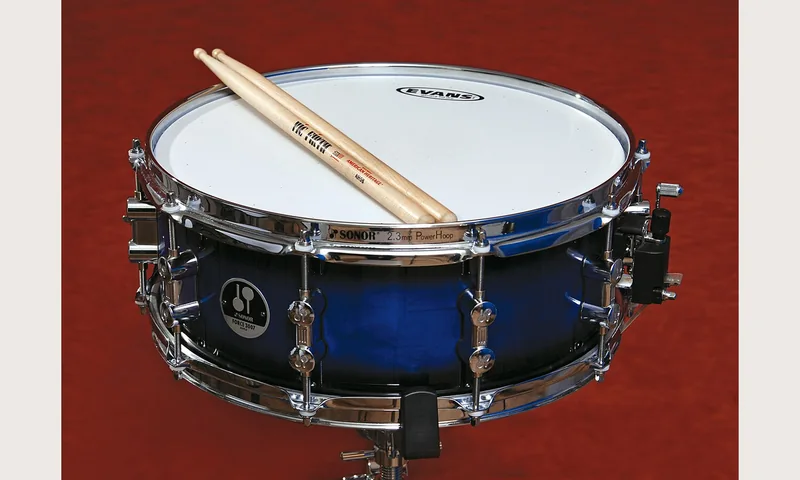
The short answer
Snare wires often respond to other sounds in the room. Excessive buzz is best approached by identifying which sound triggers it, then making a controlled adjustment. Complete silence may be unrealistic; preserve the snare response your playing needs.
What to do
- Play the snare alone and establish a useful wire setting. Record quiet strokes and backbeats as the response you want to preserve.
- Strike each other drum separately and note which one produces the longest or most distracting wire response. Repeat at an ordinary playing level.
- Disengage the snare wires briefly to confirm that they are the source, then restore them. Check for loose hardware if the sound remains.
- Try a small, even pitch change on the triggering tom, or a small wire-tension adjustment. Change one variable and repeat the same comparison.
- Play the complete groove with other instruments or a backing track. Keep the smallest change that reduces the distraction while preserving deliberate snare notes.
Name the triggering sound
A general complaint that the snare buzzes is hard to solve. Write down whether the trigger is a particular tom, bass note, vocal monitor or room sound. If only one pitch causes trouble, reproduce that pitch while testing. This makes the comparison much clearer than playing a full song and trying to remember which moment sounded different.
Protect the snare part
Wire tension affects the intentional snare sound on every stroke. Keep returning to a phrase with both low notes and backbeats. A setting that removes sympathetic buzz but leaves the ghost notes lifeless has made a significant musical tradeoff. Depending on the arrangement, a little residual response can be less intrusive than a snare that no longer performs its role.
Assess in context
Close listening underneath the drum emphasizes wire noise that may barely register a few steps away. Use the listening position relevant to the task, and include the rest of the band when possible. For recording, listen to the microphone balance you will actually use. Do not claim success from the stool alone if the original complaint came from elsewhere in the room.
Check the result
The troublesome response should be reduced in the actual musical passage, and the snare should still speak on ghost notes and accents. An isolated trace of buzz is not automatically a fault.
Know the limits
Do not tape the wire assembly heavily or crank the strainer to its limit as a first remedy. Speaker placement and room resonance can also contribute, so a drum-only adjustment may not address every cause.
Further reading
Sources for the connections and technical principles discussed above. The diagnostic sequences are our editorial explanation. Consult the manual for your exact model before changing hardware or settings.
These are general educational guides, not hands-on product reviews. How we prepare our content. Cover photo source & license.
Keep working on your setup
Stop one drum pad triggering another
Separate mechanical vibration from module crosstalk settings.
Read the guide
Centre a set of snare wires under the drum
Align replacement snare wires so both ends pull straight and the strainer has room to adjust.
Read the guide
Reduce electronic drum latency
Work through the complete monitoring path before changing trigger settings.
Read the guide