Recover a rack tom that loses sustain on its mount
Compare the drum on and off its support before changing heads to cure a choked rack tom.
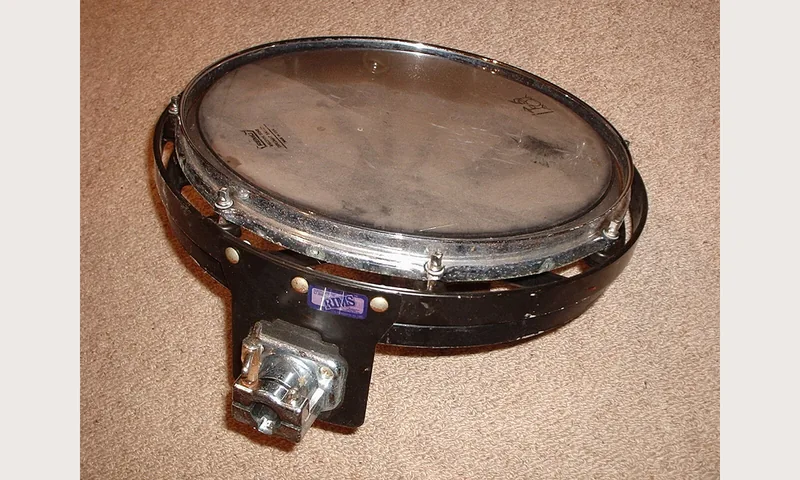
The short answer
A tom that rings freely in your hand but dies on its stand deserves a mounting check. Contact, clamp pressure and positioning can change the response you hear. Establish that the mount is the variable before buying heads or retuning both sides of an otherwise healthy drum.
What to do
- Record a few strokes with the tom mounted normally. Check that its shell, hoop and fittings are not touching a neighbouring drum, cymbal stand or bass drum.
- With help if the drum is heavy, remove it and support it securely by an appropriate fitting without squeezing the shell. Compare similar strokes while keeping your hands clear of the playing surface.
- Refit the drum according to the mount manual. Check whether an arm has been inserted excessively far or a suspension fitting is trapped against another component.
- Adjust position and clamp tightness only within the manufacturer's instructions. Support the tom while changing a clamp, and verify it cannot rotate or drop before playing.
- Test with the rest of the kit assembled. Recheck clearance during a normal fill rather than only while every part is motionless.
Make the off-mount test meaningful
A hand resting on the head or pressing against the shell can damp the comparison too. Ask another person to support the drum safely while you play, or use a stable approved support. The test is qualitative: you are listening for a large change in sustain, not claiming a measured resonance improvement. If the drum sounds poor in both positions, investigate tuning and head condition before the mount.
Follow the mounting design
Some systems isolate the shell with rubber components, while others attach directly to a bracket. Their adjustment points are not interchangeable. Identify the exact mount and read its instructions before turning unfamiliar fasteners. A bolt that appears to be an angle lock may instead retain part of the assembly. Photograph the original setup so a reversible position change does not become a rebuilding exercise.
Leave working clearance
A rack tom may clear the bass drum when unloaded but touch it after a stand settles or the player leans forward. Check the gap at the lowest point of the hoop and around the mount. Route microphone cables away from the shell if they are present. Final clearance should survive ordinary movement while keeping the tom within reach, without demanding a higher or steeper position that makes playing awkward.
Check the result
The mounted drum should retain a useful note and remain mechanically secure. A slightly different response off the stand is normal; the meaningful improvement is a clear decay without movement or contact noises during playing.
Know the limits
Do not loosen a support until it barely holds in pursuit of resonance. Different mounts load the shell differently, and a badly worn joint or incompatible arm requires the correct replacement hardware rather than improvised padding.
Further reading
Sources for the connections and technical principles discussed above. The diagnostic sequences are our editorial explanation. Consult the manual for your exact model before changing hardware or settings.
These are general educational guides, not hands-on product reviews. How we prepare our content. Cover photo source & license.
Keep working on your setup
Replace a tom batter head without losing your starting sound
Keep a useful tuning reference while replacing a worn tom head and checking the parts underneath.
Read the guide
Separate the pitches of two rack toms
Give adjacent toms distinct voices without forcing either drum beyond its useful tuning range.
Read the guide
Find the source of a floor tom rattle
Isolate a mechanical rattle on a floor tom without mistaking normal drum overtones for loose hardware.
Read the guide