Find a repeatable cross-stick sound on the snare
Choose a comfortable stick position and repeat the same rim sound before placing it in a groove.
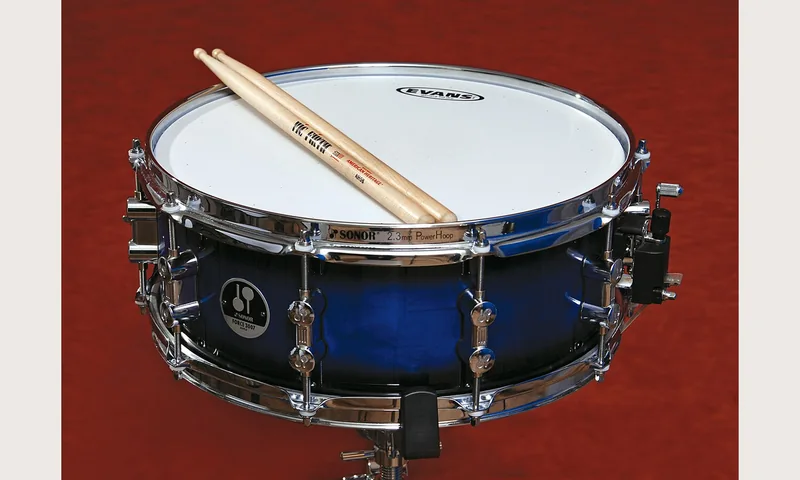
The short answer
A cross-stick sound uses the stick against the snare rim with part of the stick supported on the head. The contact position strongly affects the result. Explore a few comfortable positions slowly, choose one clear sound, and make that position repeatable before adding a bass-drum and hi-hat part.
What to do
- With the drum at a comfortable height, place the stick across the head and gently test a rim contact. Keep the supporting hand relaxed.
- Move the contact position slightly between attempts and listen. Choose a clear sound that you can produce without squeezing or twisting.
- Play quarter notes at a quiet reference tempo, resetting to the chosen position after every note. Then play only beats two and four.
- Add a simple kick and hi-hat groove. Record eight bars and listen for changes in cross-stick tone or timing when another limb enters.
Find the sound on this drum
Rim shape, head, stick and hand position all influence the result, so an exact contact point from another setup may not transfer. Make small changes and compare them at a similar force. Once a useful sound appears, notice where the stick rests and where it meets the rim. A repeatable comfortable position is more valuable than chasing a louder click through a strained movement.
Keep contact and timing separate
First produce a consistent sound without a tempo requirement. Then add slow measured notes and listen for whether preparing the contact makes you late. If timing becomes unreliable, simplify to one note every two beats. The movement should be ready before the target beat, with the strike occupying that beat rather than following a last-second search for the rim.
Compare the backbeat in context
The cross-stick may sound different when cymbals or bass drum mask part of its attack. Record the complete groove and adjust the balance of the other voices before hitting the rim harder. Try the same groove with a conventional snare backbeat and then with cross-stick. Keep the rhythm identical so you can judge whether the lighter texture suits the section. After finding a position, lift the stick away and reset three times. The sound should be recoverable without gradually sliding into place during a long pattern. This is useful when a song switches between normal snare strokes and cross-stick at a section boundary.
Check the result
Eight bars should contain clear, similarly voiced cross-stick backbeats on the intended beats. The chosen sound should be recoverable after a pause without a long search for position.
Know the limits
Electronic pads vary in whether and how they sense cross-stick playing. Check the pad and module instructions before assuming an acoustic technique will trigger the expected sound.
Further reading
Sources for the connections and technical principles discussed above. The diagnostic sequences are our editorial explanation. Consult the manual for your exact model before changing hardware or settings.
These are general educational guides, not hands-on product reviews. How we prepare our content. Cover photo source & license.
Keep working on your setup
Replace a tom batter head without losing your starting sound
Keep a useful tuning reference while replacing a worn tom head and checking the parts underneath.
Read the guide
Find the source of a floor tom rattle
Isolate a mechanical rattle on a floor tom without mistaking normal drum overtones for loose hardware.
Read the guide
Choose coated or clear tom heads by the sound you need
Compare surface finish on the same tom while accounting for thickness, construction and tuning.
Read the guide