Arrange a compact acoustic kit without blocked movement
Bring the kit within reach while keeping pedals, sticks and cymbals free to move.
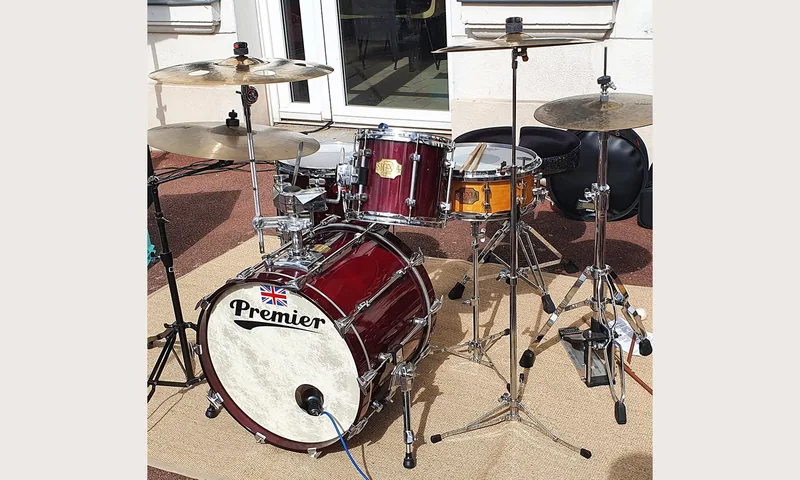
The short answer
A compact layout starts with the throne, bass drum pedal, hi-hat pedal and snare. Add toms and cymbals around those working positions rather than compressing every stand first. Leave clearance for the movement you actually use.
What to do
- Set a stable throne and comfortable pedal positions, then place the snare where relaxed strokes reach its centre.
- Add the most-used tom and test a slow transition from snare to tom without leaning.
- Position the remaining toms and cymbals one at a time, keeping their normal swing clear of rims and stands.
- Arrange stand legs so they remain stable without trapping cables or blocking pedal movement.
- Play a short passage using every instrument, then inspect the setup from the front and sides for contact or unstable supports.
Start with the repeated movements
The snare, ride or hi-hat and pedals often account for more playing than a distant accent cymbal. Give those repeated movements comfortable positions first. An occasional instrument can take a less central location if you can still reach it safely. This keeps the layout tied to the music rather than a symmetrical photograph.
Test transitions slowly
A rapid fill can hide a reach that repeatedly pulls you off balance. Play the route between drums slowly and notice where the elbows or torso must move. Adjust one instrument at a time. The aim is a clear path for the sticks, not eliminating every body movement or prescribing one technique to all players.
Plan for setup and teardown
Leave access to the clamps you need to adjust and a route for lifting drums without scraping cymbals. Photograph a working layout and use memory locks where intended. Before each session, check that no stand has settled into contact with a shell. A repeatable compact kit still needs a brief stability and clearance check.
Check the result
Every instrument should be reachable in its normal playing area, feet should move freely, and cymbals should have clearance throughout an ordinary passage.
Know the limits
Compact does not mean forcing all instruments into the smallest possible footprint. Leave access for safe entry and exit, and use hardware that supports the required load.
Further reading
Sources for the connections and technical principles discussed above. The diagnostic sequences are our editorial explanation. Consult the manual for your exact model before changing hardware or settings.
These are general educational guides, not hands-on product reviews. How we prepare our content. Cover photo source & license.
Keep working on your setup
Record acoustic drums with one microphone
Find the balance in the room before reaching for processing.
Read the guide
Transport an electronic drum kit safely
Document connections and protect sockets, mesh and moving parts.
Read the guide
Inspect a used acoustic drum shell before buying
Use a calm visual and playing inspection to distinguish cosmetic wear from expensive structural trouble.
Read the guide